

Dental calculus and the dangers it poses
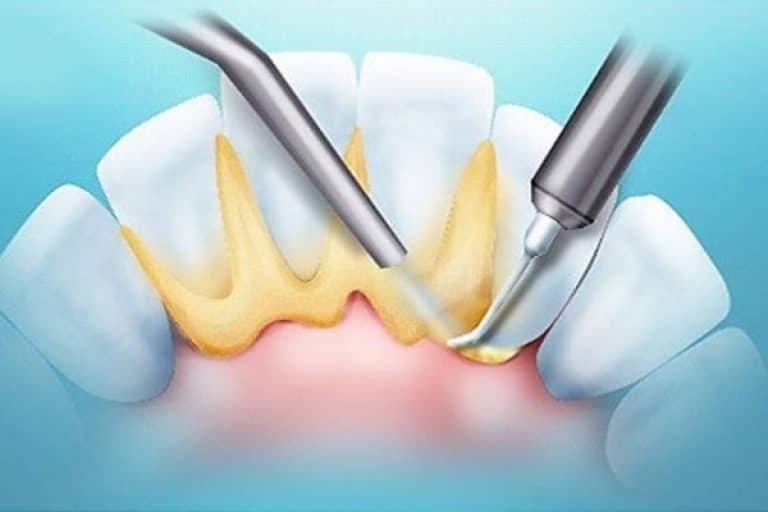
Teeth are tireless workers that have to function constantly while being exposed to attacks from invisible "enemies." At first, this hostile force looks completely harmless. A soft, almost invisible white plaque constantly forms on the surface of the teeth. It results from the breakdown of organic substances and consists of dead epithelial cells, food debris, and bacteria.
What Happens in Our Mouth?
Gradually, plaque accumulates and changes the pH balance in the oral cavity from its normal alkaline environment to a more acidic one. Under the influence of acids, microcracks form in the tooth enamel and may eventually develop into cavities - in other words, ordinary caries, the consequences of which are well known. Bacteria and their toxins also have a harmful effect on the surrounding tissues: the gums may begin to swell and bleed, the teeth may become loose and painful, and in severe cases may eventually be lost.
So how can such an unfortunate development be prevented and dental health preserved for many years?
The simplest and most accessible way to fight plaque is daily brushing in the morning and evening. However, if oral hygiene is neglected - for example, if teeth are brushed irregularly or not at all - plaque may turn into tartar. Accelerated tartar formation may also be associated with metabolic disorders, insufficient chewing of food, for example due to malocclusion or poorly fitted prostheses, and a lack of solid foods in the diet. Saliva with a high concentration of mineral salts may also contribute to faster tartar formation.
Tartar usually appears first near the neck of the tooth. As it increases in size, the hardened plaque irritates the gums and may cause chronic inflammation. Loose gums and periodontal pockets create favorable conditions for infection, while tartar can penetrate deeply toward the root area of the tooth. In such cases, professional dental care is required.
What Is Done in Such Cases?
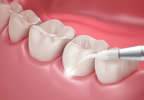
Until relatively recently, hardened dental deposits were a major problem. The situation changed with the introduction of ultrasonic methods for removing dental "calculus." The principle is that ultrasound breaks up the tartar, while a pressurized solution washes away the fragmented particles and disinfects the treated surfaces and surrounding tissues. The procedure is performed using a special device - a scaler - equipped with different tips selected according to the shape of the tooth, its angle, and other anatomical features. This is not merely a hygiene procedure, but also an effective method for preventing and treating gum disease, and it is usually recommended once or twice a year. After dental deposits are removed, increased tooth sensitivity may sometimes occur. To help prevent such discomfort, many clinics use remineralization therapy and deep fluoridation.
Nevertheless, many people experience the complications of gum disease - periodontitis. It affects a significant proportion of the adult population in industrialized countries. Periodontitis develops gradually and may initially present with bleeding gums, mild but unpleasant breath, and exposure of the tooth roots. In the past, such a diagnosis often led to tooth extraction. Today, when periodontitis progresses, a modern method may be used - deep cleaning and gum treatment with the Vector system, followed, when necessary, by stabilization of the teeth with special discreet splints.
Vector is a modern German-made device that allows deep cleaning of periodontal pockets from subgingival calculus and bacteria. This helps significantly reduce the number of microorganisms, promote closure of periodontal pockets, and achieve stable remission.
Careful attention to dental health has become a sign of good personal hygiene and responsible self-care. At the same time, the possibilities of modern dentistry have expanded considerably. In the vast majority of cases, modern dental treatment can relieve discomfort and help patients overcome long-standing concerns about the appearance and condition of their teeth.
Patient reviews
The best proof of our work comes from people who have already trusted us with their smile.

Tetiana Mykolaivna
I had two teeth treated at the Nikadent clinic and also had a dental cleaning to remove tartar. I am very happy with the doctors' work! Thank you so much; I will definitely recommend the clinic to everyone I know.

Svitlana Dmytrivna
A huge thank you to the doctors at Nikadent! I am very pleased with their work—they extracted my wisdom tooth completely painlessly! I had been putting off the extraction for a long time because I was terrified of dentists, but when the pain became unbearable, I finally decided to go through with it. My fears turned out to be unfounded!

Larysa Mykolaivna
I am very pleased with the work of the doctors at Nikadent Clinic; they treated the periodontal disease that had been troubling me for a long time! My gums are healthy now—thank you so much! I will recommend your clinic to my friends!
Need a dentist consultation?
Leave a request and we'll take care of the rest — select a specialist and a convenient time for your visit.